The treasure of every land is the history of its products

Food well being

De gusto and Well-being - Medicinal mushrooms

Autumn is mushroom season, excellent vegetables with various nutritional and beneficial properties: they are rich in vitamins (especially B vitamins, but also vitamin D when exposed to sunlight), minerals such as potassium, copper and selenium, and fiber, which promotes intestinal well-being and satiety. They also provide protein, are low in calories and contain antioxidants that combat oxidative stress and support the health of the immune and cardiovascular systems. In particular, we are talking about mycotherapy, those mushrooms that are used as supplements especially in traditional Chinese medicine. Medicinal mushrooms support the body's general well-being thanks to their properties, which include: strengthening the immune[Segue]

De gusto and Well-being - High cholesterol and diet

Cholesterol is a fat molecule found in our blood, most of which is produced by the body itself, but a percentage of it is absorbed through our daily diet (10-20%). Cholesterol is essential for our body as it is present in all cell membranes, is fundamental for the synthesis of vitamin D and bile, and acts as a precursor for the formation of steroid hormones, such as sex hormones (e.g. testosterone and oestrogen) and corticoid hormones (e.g. cortisol). Cholesterol is present in the blood in various forms. In order to be transported in the blood, it is bound to proteins: LDL cholesterol,[Segue]

De gusto and Well-being - Persimmons - Sicilian Memory

"You either love this product or you hate it!" What are we talking about? Persimmons! The persimmon (Diospyros kaki), a tree in the Ebenaceae family, is widespread in temperate climates, particularly in Asia and North America, but also widely grown in northern Italy. The persimmon fruit is eaten when it finishes ripening in the first half of autumn, contributing its pale orange color to the warm palette of this season. The tree is defined as the plant with seven virtues: it stands out for its longevity; in summer, its large green leaves offer welcome shelter from the sun; it is resistant to pests; it[Segue]

De gusto and Well-being - Nutrition for hair

Hair loss can have very different causes, including genetic, hormonal, stress-related, disease-related, drug-related treatments, or nutritional deficits. When hair loss is associated with unbalanced feeding or deficiencies of certain nutrients, the hair may weaken, growth slow, the lifespan of the hair shaft may be shortened, or the follicle may not receive enough support to produce strong hair. In these cases, intervening with a balanced diet rich in targeted micronutrients can slow down hair loss and make hair stronger, shinier and more resistant. Adequate levels of vitamin D, iron and zinc are associated with lower hair loss, while high sugar and[Segue]

De gusto and Well-being - Stretching and nutrition: the winning combination for relaxed muscles and faster recovery

Muscle well-being doesn't just depend on training or the amount of hours of rest: stretching and nutrition play a fundamental role in keeping muscles elastic, preventing injuries and promoting effective recovery. Stretching, practiced regularly, helps to: Improve the flexibility and elasticity of muscle fibers, promoting the maintenance of mobile joints. Reduce muscle tension and stiffness: with a short post-workout protocol it reduces the feeling of soreness and muscle fatigue. Promote more efficient blood flow circulation, which brings nutrients and oxygen to tired muscles. Prevent injuries as the more elastic and well-oxygenated muscles react better to sudden efforts. Practical advice? Alternate static stretching exercises (after training) with[Segue]

De gusto and well-being - Types of potatoes, how many are there?

Potatoes are among the most consumed foods in the world: versatile, economical, nutritious and appreciated by all ages! But behind the apparent simplicity of this tuber lies a great variety of different types, colors, textures, and nutritional properties. The common potato (Solanum tuberosum) is native to South America and is now cultivated throughout the world. In addition to the more common white and yellow varieties, there are also red, purple and sweet potatoes, each with unique characteristics. Let's look at them more closely, comparing their nutritional values and seeing which one may be best suited to different dietary needs. 1. White-fleshed potatoes They are[Segue]

De gusto and Well-being - Nutrition and osteoporosis

Osteoporosis is a condition characterised by a reduction in bone mass; bone is not a static structure, but rather a very dynamic one that is continuously remodelled by two cell lines called osteoblasts and osteoclasts. Osteoblasts are builder cells and have the task of forming "new" bone tissue, while osteoclasts destroy the mineralised matrix of the bone, releasing bone calcium into the system. These two types of cells contribute to bone turnover and the micro-architecture that influences the resistance of the bone, when the skeleton has less resistance it is more predisposed to fractures. Osteoporosis can be primary, that is,[Segue]

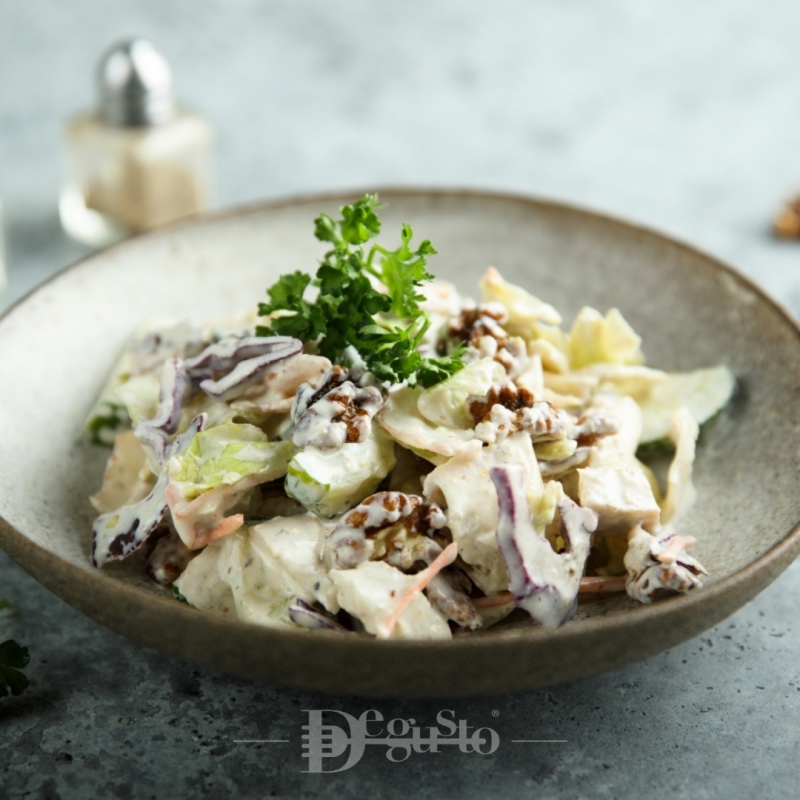
De gusto and Well-being - Grapes - Chicken, grape and walnut salad

''I want to sing the grapes, while the days and time flow, a clear song of wine, sweeping away the dirt that jumps from the saddlebag of the world...''. The Friulian poet Giacomo Vit recites in one of his poems a hymn to grapes, an indisputably important fruit among our cultures, whose millenary history has its roots in the mists of time. The first evidence of grape cultivation dates back to about 6.000-8.000 years ago in the Near East, in a region that today includes Armenia and Georgia. Here, man began to tame the wild vine (Vitis vinifera) using it until[Segue]

De gusto and Well-being - Time for soups and legumes, but the question is always the same: are they proteins or carbohydrates?

Legumes are the edible seeds of plants (herbs, shrubs, trees) belonging to the Fabaceae family, or legumes, characterized by the presence of a pod (in which the seeds are contained) that opens when it reaches maturity. The most common are: beans, lentils, chickpeas, broad beans, soybeans, peanuts, peas and grass peas. Green beans and broad beans are also legumes, but due to their low protein content and high water content, they are considered vegetables. Peanuts, on the other hand, due to their particularly high fatty acid content, are more similar to oily nuts, such as walnuts, almonds, hazelnuts, etc. First of all, it[Segue]

De gusto e Benessere - What to eat with endometriosis

Endometriosis is a chronic inflammatory disease that affects approximately 10 to 15 percent of women of childbearing age. It occurs when endometrial-like tissue, the one that normally lines the inside of the uterus, develops outside the uterus, often involving the ovaries, fallopian tubes, peritoneum, and other pelvic organs. These “ectopic” implants respond to menstrual cycle hormones just like the uterine endometrium: they thicken, flake and bleed every month. However, having no way out, blood and tissue accumulate, causing inflammation, pelvic pain, ovarian cysts, adhesions and, in some cases, infertility. The most common symptoms include: very intense menstrual pain, chronic pelvic[Segue]